


“When we used to go to the club it was like a bunch of misfits – people who didn’t fit into regular society. We were all dressed differently and the dance floor was home.” – Crystal Waters
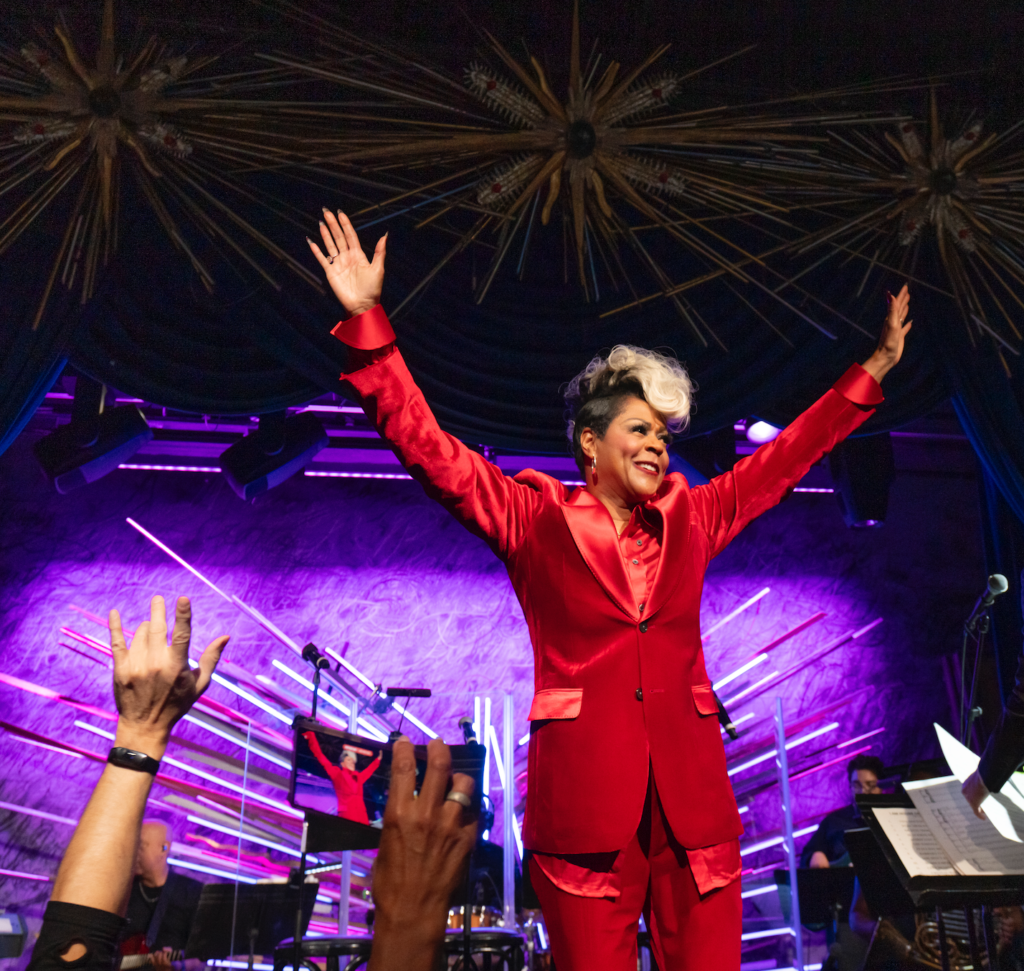
At a night out with Crystal Waters, CeCe Peniston and the original voices of house music, JANET MERCEL reflects on the life of a club kid.
The hotel suite is at least 105 degrees. I’m sleeveless, but I feel for the divas around me, all encased in layers of bodycon leather or sequins. Crystal Waters, her platinum mohawk piled high, fans herself. “I didn’t think about having an outfit ready for the press,” Waters claims. “Some artists planned ahead and had their outfits ready, but this came out of my suitcase. It’s all I had in there.”
As if on cue, I push miles of tulle out of my face as Barbara Tucker – the “Queen of House” – brushes past in cherry-red crinolines, a corset and that trademark 10-gallon hat. No one can figure out how to adjust the thermostat. The room is the usual calm chaos before a huge show. There’s a lot of music royalty here tonight, although so far no one can locate Susanne Bartsch, the evening’s presenter. The “Queen of New York Nightlife” is supposed to have arrived already, but she’s gone incommunicado on her way over to Sony Hall in Times Square.
I am here for the most recognized house songs ever recorded, performed by the original artists. “Crystal Waters, I Am House Orchestrated” is a sold-out show, its namesake artist at the center of it all. The “100% Pure Love” singer has over a dozen #1 Billboard hits, four Billboard Music Awards and last year she was awarded the first EDM Awards Female Icon. Robin S (“Show Me Love”) is around somewhere and CeCe Peniston (“Finally”) and Charvoni Woodson of Black Box, Amuka and Inaya Day, the show’s musical director.
“We got to do this in New York. That’s where it started.” – Crystal Waters
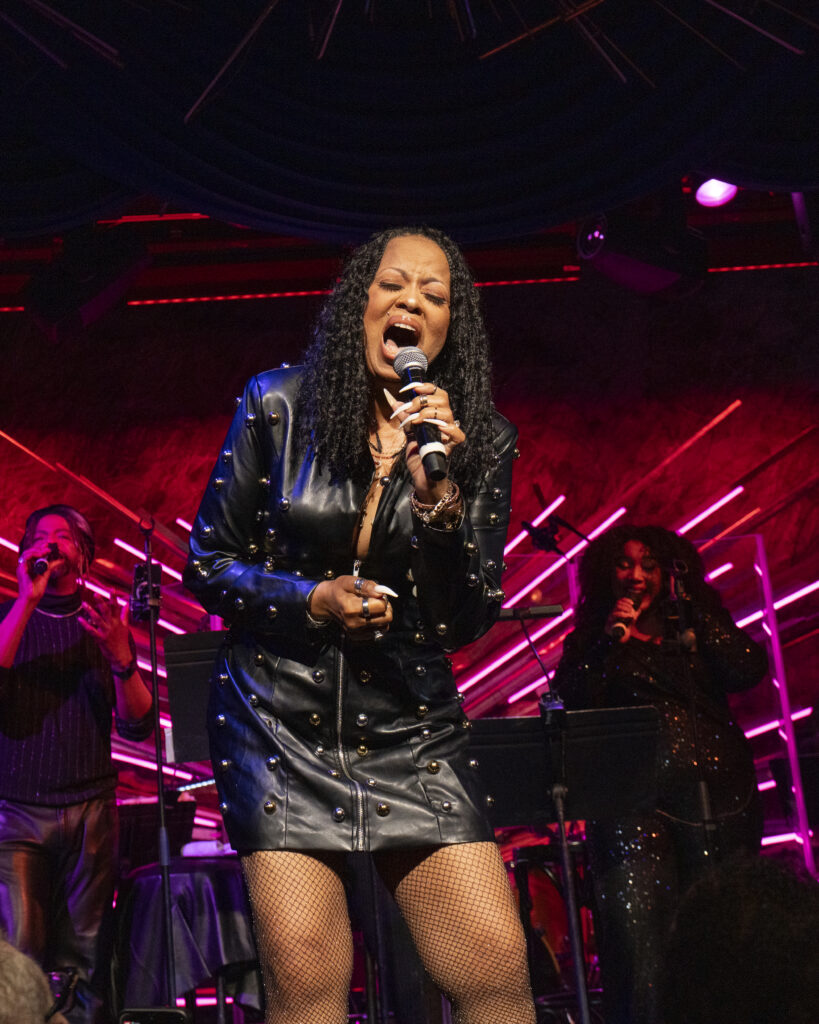
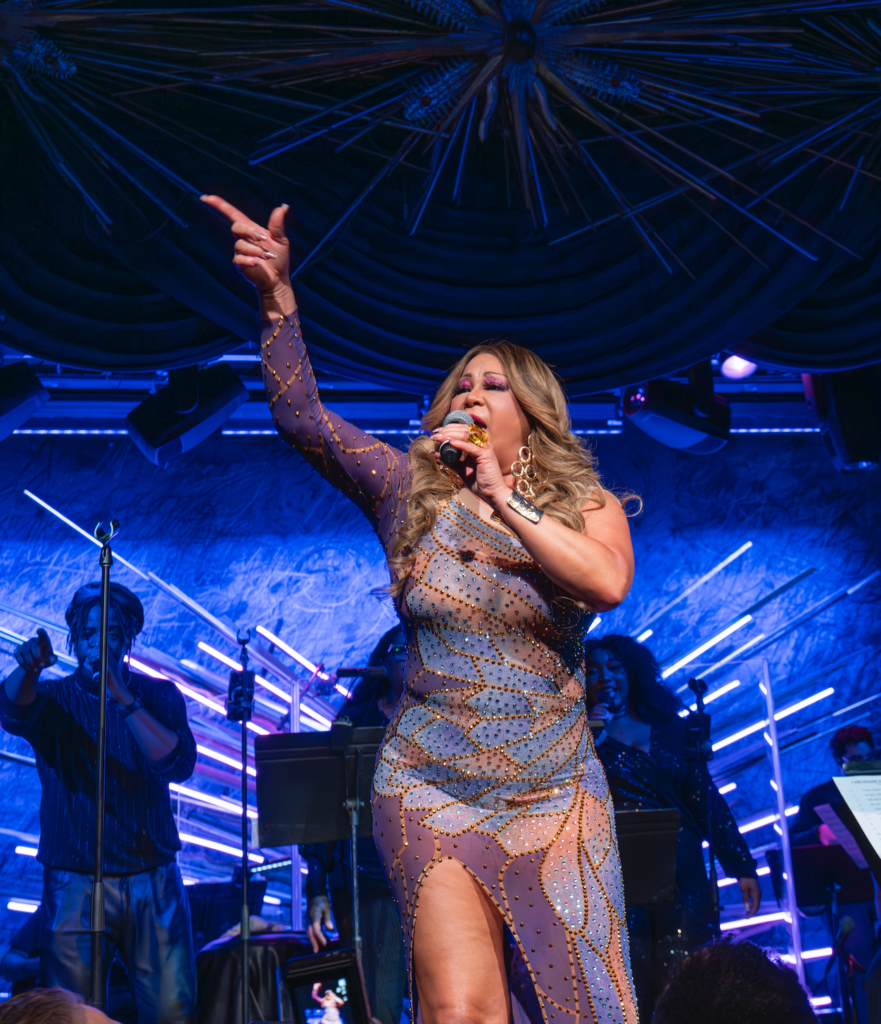
These women have been in the industry for three decades, in some cases four, and they’re all currently writing, dropping singles and albums and books. “We went into rehearsals yesterday,” Waters tells me. “I don’t think these people are ready for it,” Waters says. “These girls are singing! I don’t think you understand, even the background singers. I was like Whoa!”
One by one the performers give belt out soundchecks of their hits—songs we have heard and absorbed our whole lives, courtesy of the NBA and Coyote Ugly if not real life. From my VIP perch on a sofa nearby, the power of sound coming out of their bodies makes me feel like that scene from The Italian Job remake, when the Napster guy buys speakers so loud, they can literally blow a woman’s clothes off. My clothes incidentally stay on, but the effect is the same—I am awestruck.
Waters sings the immortal “Gypsy Woman,” and suddenly I’m sixteen again.
She wakes up early every morning, just to do her hair now
Because she cares, y’all
Her day wouldn’t be right without her makeup
She’s never out of makeup
She’s just like you and me
But she’s homeless, she’s homeless
“My father used to tell me people just want to sing along,” Waters says. “I don’t know if people still know what the song’s about. They all know: ‘la da di la da da.'” “Gypsy Woman” came out in 1991, inspired by a woman in Washington, D.C. who sang gospel songs on the corner for money, fully dressed and made-up. “I was young, I had an attitude, like, ‘she needs to go get a job,’” Waters remembers. When the local paper ran a story about the woman, about how she lost her job in retail and how quickly the dominoes fell, it changed Waters’ whole attitude. “I had more compassion and sympathy. The one thing that struck me was that she said, ‘I dress up because if I’m going to ask people for money, I should be respectful and look respectful.'” Waters pauses. “There’s a different perspective of homelessness now. Maybe you don’t have a family, maybe you don’t have a country, maybe you don’t fit in with the people at work. It’s a whole bunch of things. When we used to go to the club it was like a bunch of misfits – people who didn’t fit into regular society. We were all dressed differently and the dance floor was home.”
“We don’t say “day life.” Because it’s what happens at night, perhaps, that gives us something different. A place and a space you can’t find anywhere else.”
When she says that—the dance floor was home—I am shocked to feel tears sharpen behind my eyes. She’s talking directly to me and to all of us who took the train from somewhere else looking for somewhere to be. I’m sure there are happy children who run away to the clubs for whatever reason, but I wasn’t one of them. It was almost a decade after most of these songs were recorded that I started taking Metro North down from the Hudson Valley by myself. I graduated high school in 2000 and at seventeen, I caught the tail end of all the nightlife madness. The twilight of the dark and decadent Limelight, massive Webster Hall, the mega-club Crobar. Showing up to school still wearing lurex tights and a plastic skirt from the night before, reeking of cigarettes. The scene was shifting then. House music was getting whiter, colder and more European. The clubs were playing electroclash, no-wave, new wave and then hip hop. DJs went from vinyl to USB sticks; the technology changed everything, making it both more and less democratic. But layered through it all was always, always the original true house, with real vocalists and funk roots—the sound that Waters helped create.
Smaller dance spots came later, like Trash bar, where the Scissor Sisters played when I was still a teenager and it was still Luxx. Or APT, where I sat on the lap of a person someone told me afterward was Pharrell, but no one knew who he was yet. Or Home Sweet Home, where I was working the door one night during Fashion Week and didn’t let in designer Jeremy Scott into his own over-capacity afterparty. “This is fucking ridiculous,” Scott screeched into his cell phone, viciously punching buttons. “This is my party!”
Twenty-five years later, Waters is preserving the history of house music, the club community, the positivity. “I want people to know where house music came from, where it started, who was part of it,” she says firmly. “I don’t want that to get lost. I have people who ask me, ‘Dance music started in Europe?’ and I’m like, ‘Excuse me. No!’ There’s this whole thing about David Guetta started house”—she makes a face—” and as long as I’m alive, and people recognize my face and my name, I’m going to make sure this story is told.” Barbara Tucker leans in. “Lady Crystal Waters decided that we should be here. She wanted the world to see the community. This is where we grew up. This is where our comrades walked arm in arm to the sound of house.” Waters nods her head. “We’re here in New York and we got to do this in New York,” she says. “You know what I mean? That’s where it came from.”
For Tucker, making music is the ultimate act of service. “It’s not just shaking my groove thing,” she says. “It’s the ministry of how we, with the assigned gift of house, how are we spreading it. That is the gospel. We’re here to tell the story. Give them answers through songs of how to get up and survive and live.” Charvoni Woodson of Black Box, in red sequins with a pineapple-blonde coif that would make Dolly Parton jealous, has her own definition of house music: “Nobody knows what you do in your house. You sing, you dance like nobody’s watching, you holler, you’re screaming. So, when I say house music, it’s spiritual, it’s a release—it’s house, it’s your house. Well honey, you are in my house.”
“I Am House” is Waters’ whole brand: a record label, a podcast with over 10 million listeners every month across 30 countries.”
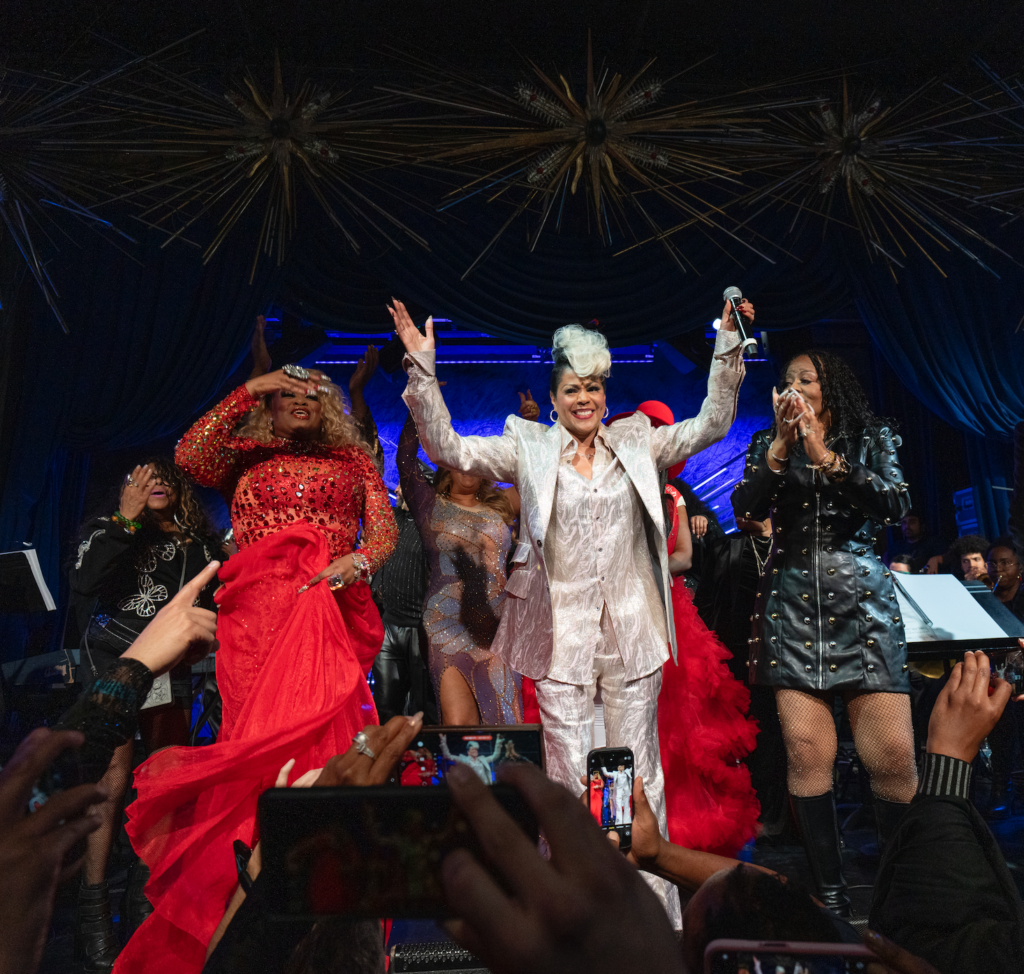
“I Am House” is Waters’ whole brand: a record label, a podcast with over 10 million listeners every month across 30 countries. She’s the grandniece of Ethel Waters, the first Black woman to have her own television show, the first to be nominated for a primetime Emmy, the second to be nominated for an Academy Award, and one of the highest-paid Broadway actresses of her time. Waters’ uncle was saxophonist Zach Zachary, who played with Diana Ross; his band MFSB did the theme song for Soul Train. Her father was a jazz musician. “I toured with him every summer.”
Susanne Bartsch suddenly bursts through the door. “The line is around the block,” she exclaims. “There’s people everywhere.” Bartsch shows off her flame-themed ensemble by The Blonds from all angles while calling for champagne. “I’m on fire,” she crows. Everybody hustles downstairs to the ballroom that is rapidly filling with bodies.
Why do we call it nightlife? It’s the “life” that gets me. We don’t say “day life.” Because it’s what happens at night, perhaps, that gives us something different. A place and a space you can’t find anywhere else. Whether true life and love can be found on a dance floor is up to you, but house music will never stop trying to convince you it’s possible.
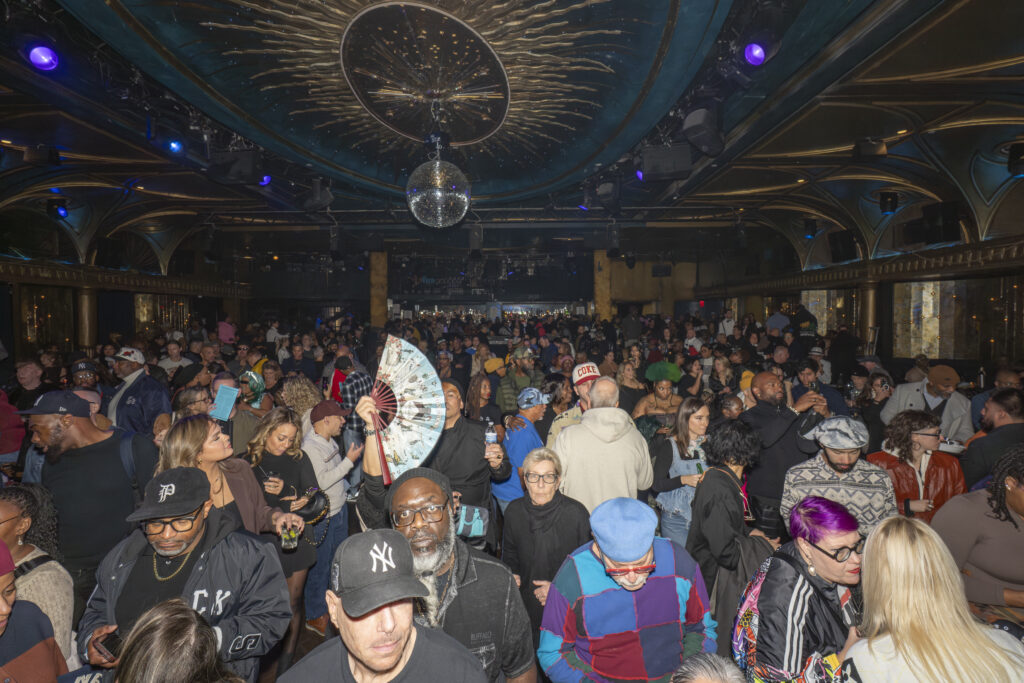
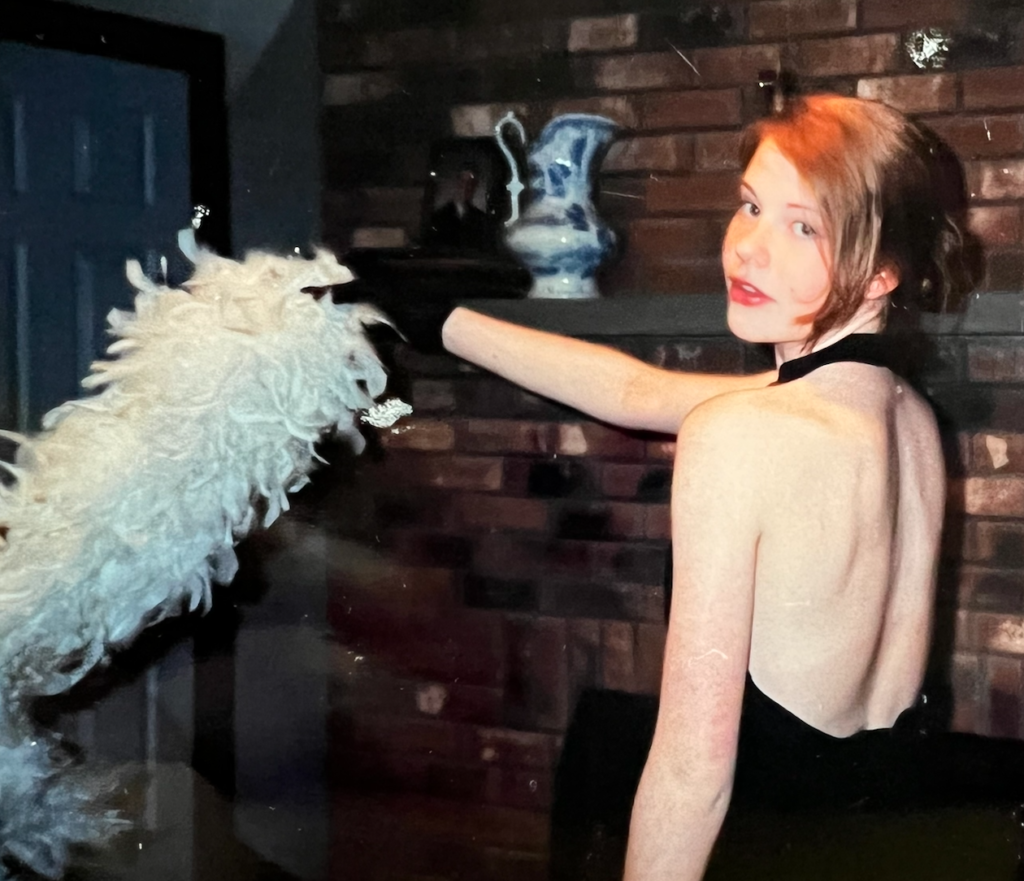
In 2003, my favorite “going out” outfit was a pair of La Perla pajama pants, a string bikini top and a Polo baby blue cashmere cable knit, with either Topsiders or five-inch platform moon boots. The sweater obviously came off immediately. (I found similar pajama pants recently on eBay for about $230, listed under “Y2K,” so at least my memory is on there.) At Sony Hall, it’s like watching a time warp of nightlife through the decades, through eras. Performance art headdresses and bondage boots float through the crowd. A clutch of drag queens in front of me slap their fans hard enough to create their own weather system. Old school club kids mill about in the same oversize jeans and button-downs they wore in 1998.
The lights drop. By the time Charvoni Woodson breaks into “Strike It Up,” the crowd is apoplectic and the floor is bouncing. Suzanne Bartsch screams into the microphone, “Who’s been on a dance floor with me?”
I raise my hand. Because I have been, and this is my house.
“I AM HOUSE” PHOTOGRAPHS: David Warren / Sipa USA
