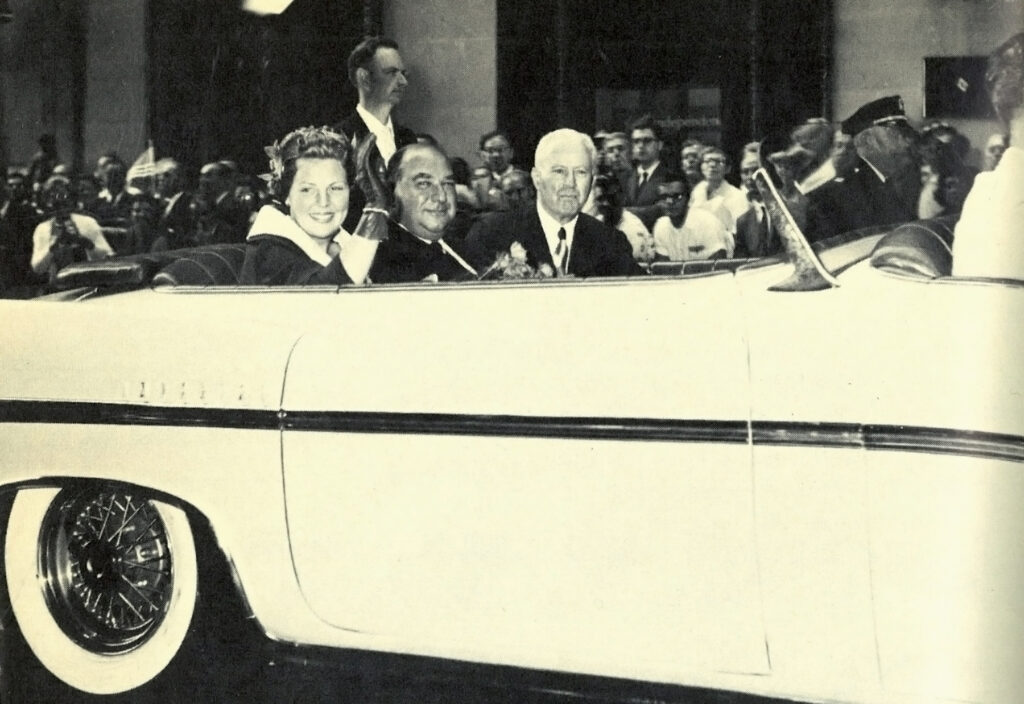
“He was a natural-born salesman whose best product was himself. Like a young Larry Gagosian—buying and selling anything to anybody, whether it was his to sell or not, and rarely taking no for an answer.”
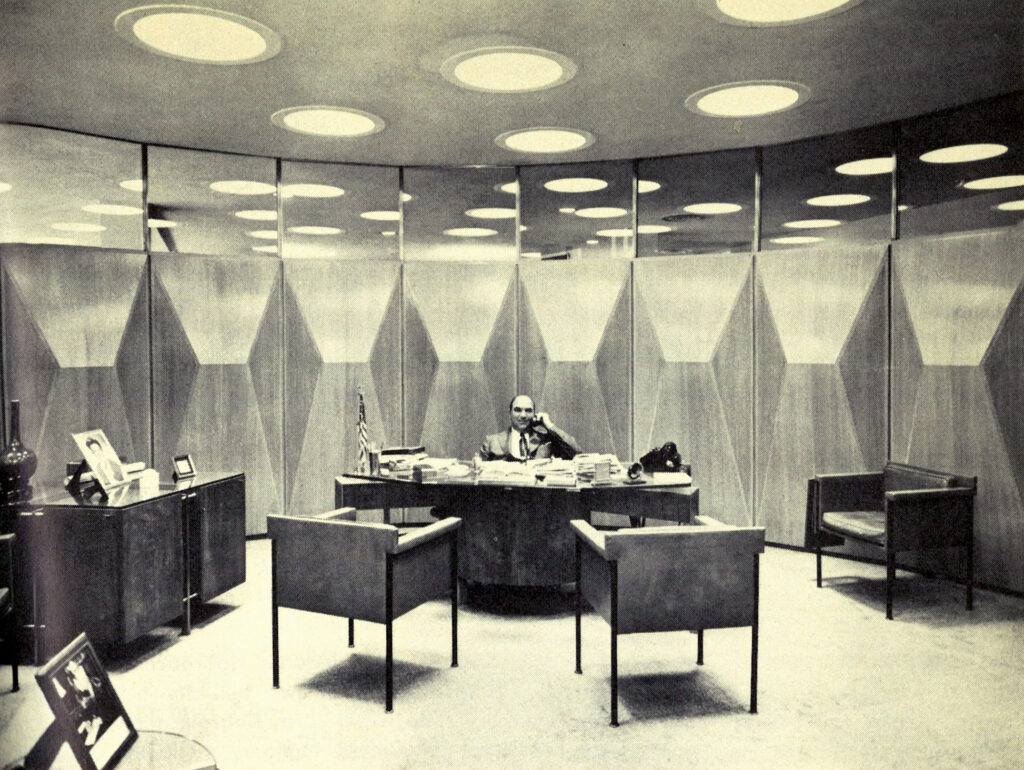
BY JANET MERCEL
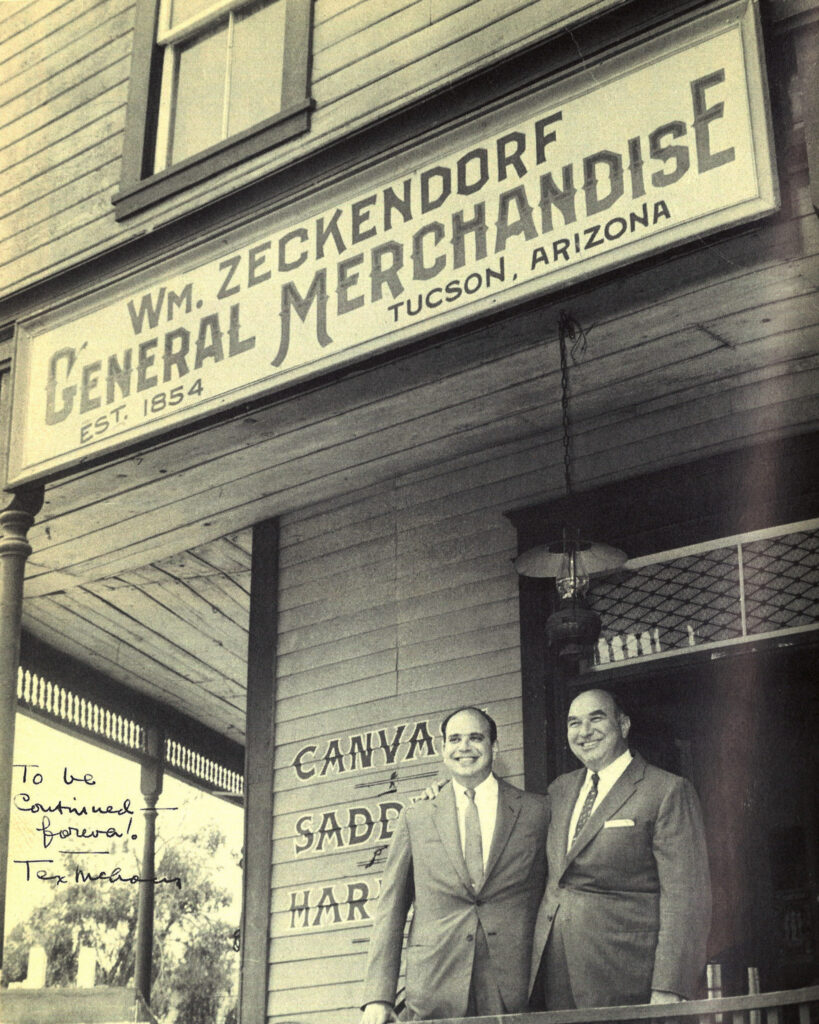
William Zeckendorf Sr. loved drama, the spotlight and making headlines. No one liked a joke, a drink, or a party more than he did. Peers compared the real estate titan’s greatness to the likes of Truman and Churchill or a modern Medici. He’s credited with the growth of the nation from the 1940s to the 1960s, one of the rare birds with the chutzpah to build a country when it was a heck of a lot easier to play it safe. The great Le Corbusier called Zeckendorf “the man who has done more than anybody else for architecture in America.”
A real estate titan whose holdings would be worth a trillion dollars in today’s market, Zeckendorf was the one to call if you had a zillion dollar property to unload in a pinch. He was a natural-born salesman whose best product was himself. Like a young Larry Gagosian—buying and selling anything to anybody, whether it was his to sell or not, and rarely taking no for an answer.
Zeckendorf was a risk-taker and a gambler who lived large and loved an 8:00 a.m. power breakfast as much as a midnight deal. An icon of all the wealth and power Manhattan has to offer; he was always one step ahead of everybody else but also someone who led people over cliffs. His spectacular rise and fall is New York legend: an immense fortune, calamitously imploding in true pirate style, with a short drop and a sudden stop. Defeat was not in his DNA, however, and two generations later, the Zeckendorf dynasty still has a hand in running New York real estate (15 Central Park West is one of their babies).
Dominate. Move fast and break things. Always be closing. Zeckendorf spoke the timeless tongue of entrepreneurs and the insanely ambitious. Famous failures and a culture of overleveraging yourself to the point where millionaires are sneaking out the back door to avoid creditors are reframed as battle scars. A Life magazine article once merrily crowed that Zeckendorf led “a thoroughly undistinguished childhood”—a background that only endears him more to a new generation of entrepreneurs. How, they wonder, did a high school dropout who went on to achieve the latter-day equivalent of a GED (he found school boring) make it? Later accepted at NYU, his college experience reads like an F. Scott Fitzgerald novel: “football games, raccoon coats, parties, giddy flappers and not much work,” until he dropped out of that, too.
“Zeckendorf wrote the (literal) book on robbing Peter to pay Paul. His memoirs are a playbook primer for modern-day real estate bros.”
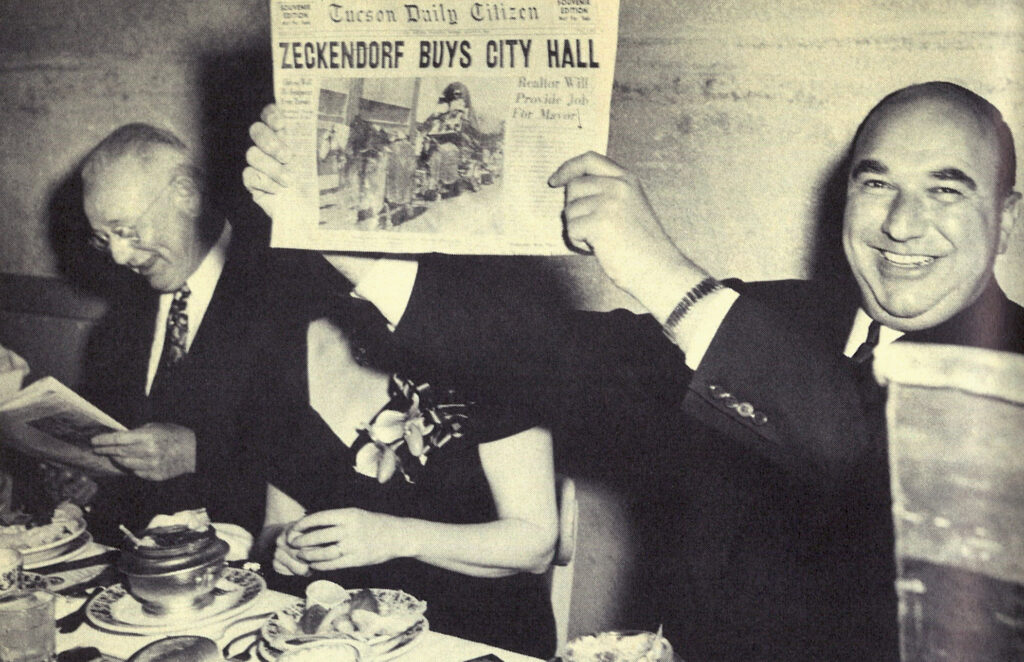
Zeckendorf wrote the (literal) book on robbing Peter to pay Paul. His memoirs are a playbook primer for modern-day real estate bros, moguls, and the aspirational alike; of what to do, and just as often, what not. His brio paved the way for a new generation of Adam Neumann-like unicorns, (person who invested $13.8 million of WeWork’s money in an artificial wave pool company because he was passionate, at the time, about surfing). The only reason the book exists is because, to get his building back, he had to get all the existing tenants to sign new long-term leases, including a publishing house. The publisher agreed to sign on the condition that they release Zeckendorf’s autobiography. The tycoon hated the idea and rejected the proposed title “The Mad, Mad World of William Zeckendorf.” More than the book itself, he hated losing a deal and eventually agreed. The more modest title he settled on was Zeckendorf: The Autobiography of the Man Who Played a Real-Life Game of Monopoly and Won the Largest Real Estate Empire in History.
The first bundle of money he ever earned in real estate ($8,000) made him so uncomfortable he immediately spent it all on a honeymoon with his first wife, Irma, networking and blowing cash across Europe. He returned home to the stock market crash of 1929 and toughed his way through the next several years, painfully climbing the ladder of Manhattan real estate.
By Zeckendorf’s mid-thirties, despite years already invested in wheeling and dealing, he considered himself a failure—“affluent, even if often broke.” During the Great Depression, the check for his son’s school bounced. He owed his tailor for his suits. When he joined the management company Webb & Knapp in 1939 after some successful dealings with them, it was because he needed the job. By 1942, he grew their holdings to $2 million, and by 1951, just over a decade since beginning, W&K’s holdings exceeded $42 million. Webb & Knapp would become the vehicle with which he would take over New York.
He hated considering anyone an enemy, even those in New York who cheerfully willed him to commit suicide when his company finally tanked. When he referred to granite-hearted urban developer Robert Moses as “that extraordinary man,” he meant it as a compliment, and called him a good friend even after Moses, and everyone else, royally screwed him over in the complex dealings of the buying and selling of the United Nations property in Midtown East.
““I’ve never been afraid of debt,” Zeckendorf once said. More likely he was addicted to it, always more comfortable in the red than in the black. Over-leveraged and spread too thin, he was never happy with the money in his pocket unless he was spending it.”
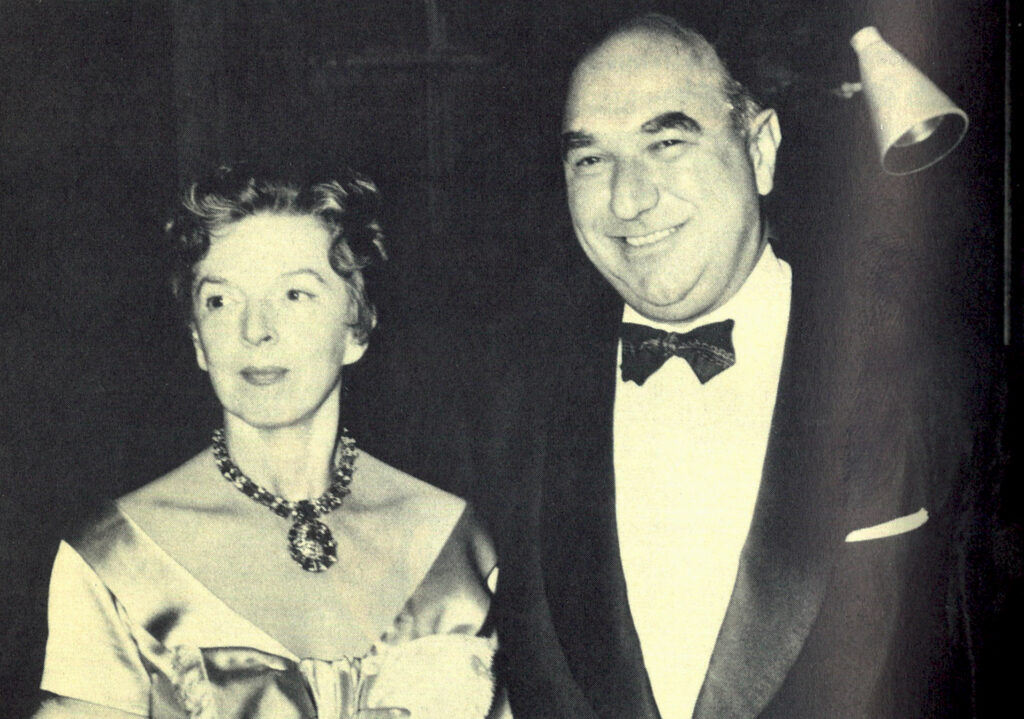
Irma divorced him for being an incurable party boy, an uncultured swine, and avid ladies’ man. (Afterward, he considered her a good friend for life, too.) He wasn’t a good old boy but seemed to have no animosity about what he was, a charming Good Time Charlie who worked his way up to swilling martinis with the best of them. He got his big break after ending up in a room with Vincent Astor, who, over plenty of scotch and martinis, enlisted W&K to restructure the Astor’s $50 million in real estate holdings.
Across the midcentury, Zeckendorf’s fingerprints were everywhere: Long Island’s Roosevelt Field, the first major shopping center; tens of thousands of acres of land in Florida and Los Angeles; a jail in Boise, Idaho; developments in Dallas, Washington, Los Angeles, and Detroit. He brokered deals that at the time were the largest ever, ranging from commercial, office, and hospitality projects that built a modern landscape culture, urban redevelopment from Denver to Montreal to Washington, DC, Chicago, Philadelphia, and Pittsburgh.
But it was New York where he was king of the kingdom. He remade the Upper West Side and reshaped much of the Manhattan skyline. He owned the Graybar Building, purchased and repositioned the Chrysler Building, and refurbished a horse academy into what would become ABC Television Center, an early template for major media campuses.
Zeckendorf entered the nightclub business when he bought the Monte Carlo (Big Bill was not one for subtlety), snatching it from the guy who owned the Colony and the owner of the original club in Monaco. Under their management, profits slipped through their fingers like water, but in Zeckendorf’s hands, it was busier than all the venue spaces at the St. Regis and made half a million dollars before he let it go. At the Monte Carlo, he did as much deal-making from the corner table, outfitted with a telephone, as he did from his Madison Avenue I.M. Pei-designed penthouse office.
It was at the Club Monte Carlo in 1946 that, drunk at 2 AM, he signed the paper turning over a sprawling 17-acre parcel along the East River—a former slaughterhouse district and eyesore he was desperate to unload—to the United Nations. The UN’s site search was equally frantic. Philadelphia was the leading candidate, with a deadline of December 11 to finalize. On December 10, Nelson Rockefeller offered Zeckendorf $8.5 million for the land, and John D. subsequently donated it as the UN headquarters. Nursing a hangover so heavy he thought he’d dreamed it all up, Zeckendorf could hardly believe he’d pulled off one of the most important real estate deals in U.S. history. The glass Wallace Harrison-designed tower would become an enduring symbol of international diplomacy, and New York, not Philadelphia, was chosen as its permanent home.
“It was rare that anyone was able to get one past Big Bill, but slippery Howard Hughes was one who managed.”
One day at an event Bill describes as “a gathering” (we can only assume it was a party, since he was at a party as often as he was literally anywhere), the head of Morgan Guaranty, now JPMorgan Chase, told Zeckendorf he looked like a million dollars. “I’d better,” he said. “I owe you three million.” The bankers all laughed. But it was too much, too fast, and too hot for his original partners at Webb & Knapp, who he ended up buying out in 1948.
By the mid-1960s, no one was laughing.
“I’ve never been afraid of debt,” Zeckendorf once said. More likely he was addicted to it, always more comfortable in the red than in the black. Over-leveraged and spread too thin, he was never happy with the money in his pocket unless he was spending it.
In a 1950s radio interview, his second wife Marian recalls his work ethic as far above and beyond his peers, recalling a telephone call that came in after 10 o’clock one night when he was terrifically exhausted and already in bed. Zeckendorf roused himself, put on his clothes and “wearily he went out. It took a lot of willpower to get up when he was tired and exhausted to meet a man and talk to him about a deal. I admired him greatly for that,” she said. (Although, given that he had a predilection for making friends outside his marriage, and that a situation with one of his mistresses was to become quite public and humiliate them all, one can’t help but wonder about who exactly was on the other end of that call.)
It was rare that anyone was able to get one past Big Bill, but slippery Howard Hughes was one who managed. The eccentric Hollywood mogul lured him out to LA with Laurance Rockefeller on the pretense of a deal, in a Hughes-esque episode that included coded passwords, secret door knocks, switching cars and midnight meetings at an abandoned airport. The deal never went through, but Zeckendorf loved every minute of the chase, the thrill of being outmaneuvered and tested, and the story became yet another legend in the mythos of a man who thrived on chaos, risk, and the sheer love of the game.