“I connected with that idea of someone trying their best and being completely misunderstood.”
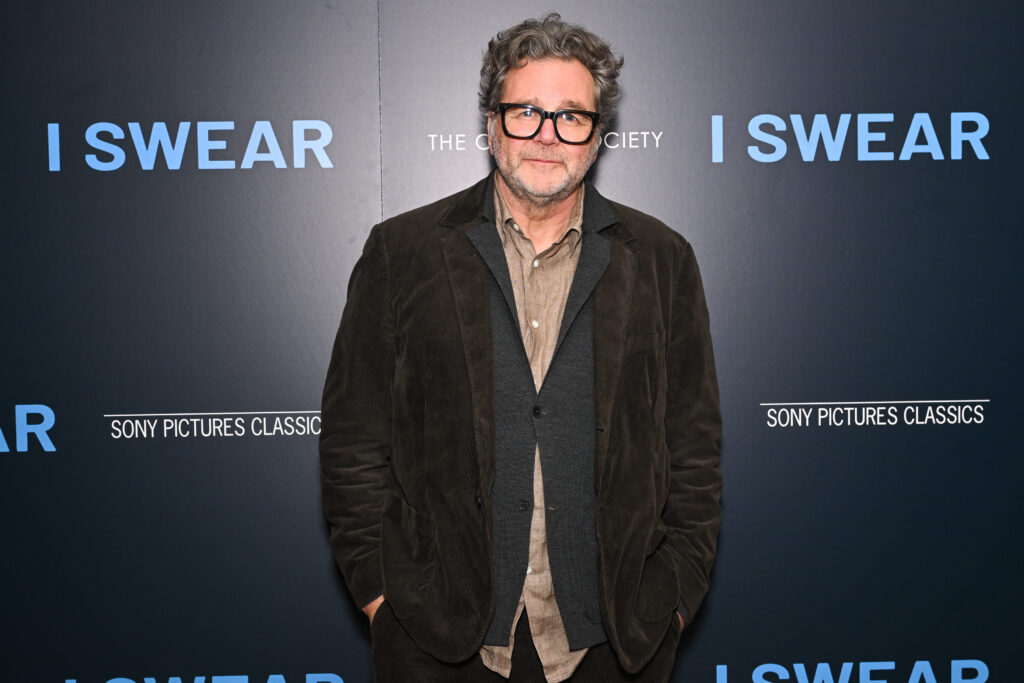
A filmmaker best known for the offbeat charm of “Ned Divine,” Kirk Jones talks to TED HILDNER about his deeply personal new film “I Swear.”
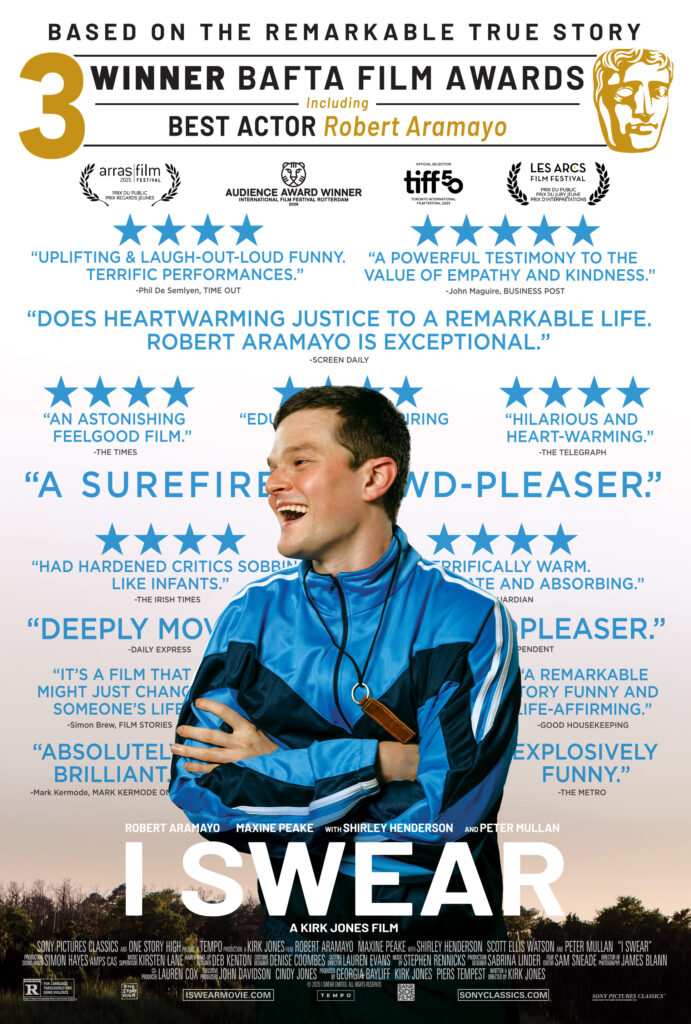
Based on the real-life story of John Davidson, “I Swear,” is as educational as it is jarring and unexpectedly charming, following a young boy who during adolescence, succumbs to Tourette’s Syndrome. It’s a journey that forces the audience into a space of emotional uncertainty, where laughter and discomfort exist side by side. At a recent Cinema Society special screening, the crowd was literally speechless afterwards.
Jones financed the film with his wife Cindy to maintain complete creative control. He didn’t set out to make something sensational, if anything, his goal was the opposite. Jones tells Davidson’s story without manipulation, without invention, and without reducing Tourette’s Syndrome to a spectacle.
“I Swear” feels less like a movie and more like an experience. The message lingers long after the credits roll and made me reflect on just how fragile life can be. In a time defined by so much division and lack of empathy, “I Swear” celebrates much-needed shared humanity.
“That tension is real. When I first spoke to John, one of the first things he said was that his life has been both tragic and hilarious. Sometimes, within minutes of each other.”

John Davidson’s story is truly incredible.
I saw a documentary about John in the late ’80s when he was a teenager. It stayed with me for decades. He was a good kid, really trying to do the right thing, and suddenly this condition takes over and makes him say things he has no control over. People thought he was acting out, or worse, that he was insane. I connected with that idea of someone trying their best and being completely misunderstood.
You waited years before making the film.
I wrote his name down in an ideas book in 1989: “John Davidson, Tourette’s.” About four years ago, I came across it, tracked him down, knocked on his door in Scotland, and we sat down for a cup of coffee. I couldn’t believe no one had made this film already. Once I spoke to him, that was it. I knew.
I didn’t know whether to laugh or cry during so many scenes.
That tension is real. When I first spoke to John, one of the first things he said was that his life has been both tragic and hilarious. Sometimes, within minutes of each other. That became the blueprint. The humor can’t come at his expense. It has to come from truth. If the audience is unsure how to feel, that’s actually the most honest reaction.
I never felt like you were taking advantage of Davidson.
John told me early on that the Tourette’s community often feels exploited and that people invite them in under the pretense of education but just want something shocking or funny. I didn’t want to do that. I treated it almost like journalism; recorded everything and wrote it all down. I had about 200 pages and then carefully shaped it into a script. Almost everything in the film comes directly from his life.
It was hard to know how to feel about John’s parents.
I have three boys myself, and I said to John early on, I’m not confident I would have done any better. Imagine your child saying things that deeply hurt other people and insisting they can’t help it. In the ‘80s, no one understood Tourette’s. It’s very easy to judge from a distance. Much harder when you’re living it.
You self-financed “I Swear.”
My wife and I sold our house and put everything into it. The reason was simple. Control. I wanted to cast the film properly, without outside pressure to choose someone more ‘marketable.’ That’s how I ended up casting Robert Aramayo. In a traditional system, I don’t think I would have been allowed to.
It paid off. He won Best Actor at the BAFTAs.
He was extraordinary. There was an intensity there, but also a lightness. When I took him to meet John, they connected immediately. That was the moment I knew.
“If people leave the film seeing the world, even slightly, through someone else’s eyes, then we’ve done something worthwhile.”

I read that you wanted to create a story about dignity.
It is about dignity. There’s a line John always says: “Ignore the tics, but not the person.” That stayed with me. Because it applies to so much more than Tourette’s. We’re very quick to categorize people, to reduce them to one thing. This film is about seeing the whole person.
The film is getting great reviews.
Because it’s honest. We’re living in a time where everything is very polarized. People are constantly being judged, categorized and pushed into boxes. Audiences are craving something that asks them to feel instead of deciding. Empathy, really, is what it comes down to. I’m incredibly proud. Truly. We set out to make John proud and to make the Tourette’s community proud. That was the goal. Everything else, the awards, the box office, that’s a bonus. And I haven’t regretted a second of it. If people leave the film seeing the world, even slightly, through someone else’s eyes, then we’ve done something worthwhile.
What’s next?
Something very different, a project based on a children’s character called Mr. Benn. But at its core, it’s still the same idea, using storytelling to show that problems can be solved with kindness, with compassion, with common sense. Which, these days, feels more important than ever.