


“I’m really drawn to worlds of beauty that hide cracks of darkness.”

JANET MERCEL meets playwright and screenwriter Lila Raicek to plumb the depths of writing, risk, desire, and her new novel The Plunge.
When I meet Lila Raicek for lunch at The Frick, neither of us is sure if we’ve met, before realizing it would be impossible to forget if we had.
“Should I say nice to meet you?” I ask, putting my cards on the table.
“Are we actually in The Parent Trap?” she says cautiously.
We’re both New York writers with fair faces and long red hair, and a lot of people in common. We both have on rainy-day mackintoshes, jeans and loafers, and diamond engagement rings featuring vintage stones from our grandmothers. I notice she has on nearly my exact earrings — diamond solitaires with a small halo. Jewels, it turns out, are a character all their own in The Plunge, as is the museum we’re currently sitting in.
I have a habit of interviewing women I curiously mirror, but this time borders on eerie. There are myriad strange ways our lives and interests have overlapped, and it all comes spilling out in the upstairs restaurant. Over the course of well over an hour– and numerous attempts by the poor waitstaff to get rid of us– we unravel quite a bit about each other, even though I’m supposed to be interviewing her. Eventually we turn off the tape recorder.
The Plunge is a jet-set thriller centering around a dangerous liaison with a talented jewelry designer (I happen to be married to a talented jewelry designer). One of Raicek’s earliest writing assignments was for The Wall Street Journal, about a cutting-edge cardiac procedure, and the month she spent with patients is still present. Her “favorite character” in The Plunge is trying to ignore his heart condition. The protagonist, Liv, is avoiding her own medical crisis, walking around with a “ruined face” after a mysterious car accident that killed her problematic fiancé. Raicek herself has had “several near-death experiences, medically.” She Googled me before our interview, and the coverage about my experimental pacemaker struck a nerve.
“In the book, [Liv is] grappling with this scar. She has to spend a lot of time ping-ponging from this glamorous world and retreating into the hospital. You, as a writer, can identify, too, that you’re always carrying some sense of the scar being with you every single day.” The scar, of course, refers to the damages people see, and all the ones they don’t.
“My whole life, all I ever was was a writer. I made the decision to never let anything come in the way of my work again.”
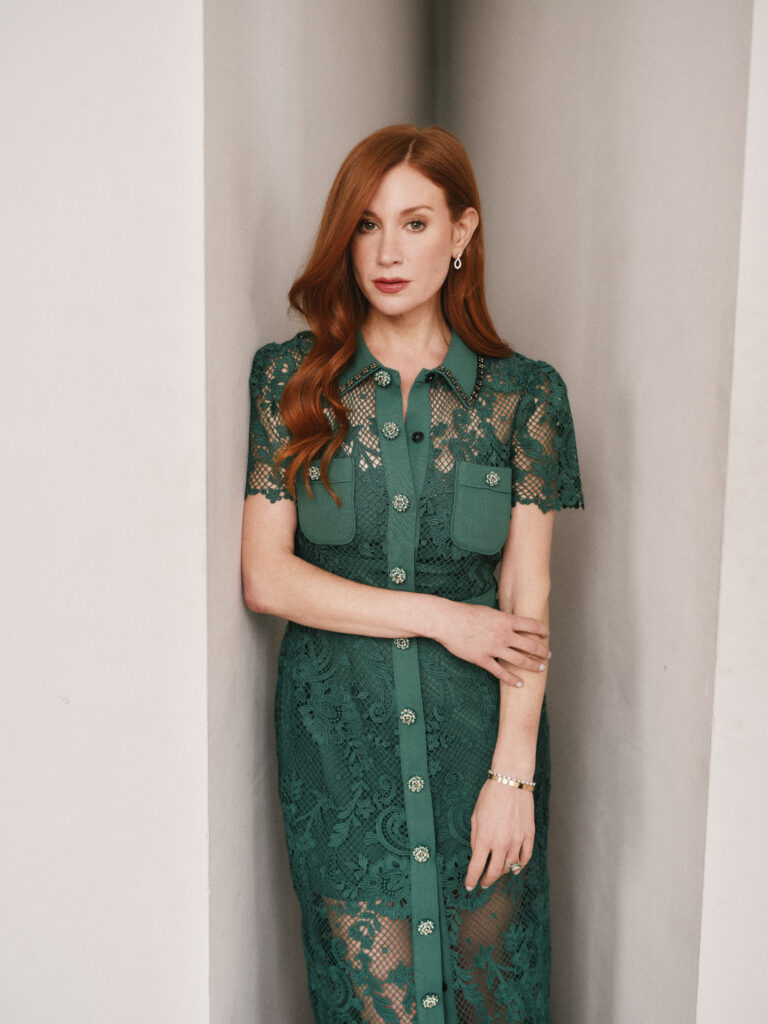
“I’m really drawn to worlds of beauty that hide cracks of darkness,” she says. “There’s a metaphor in the book, about the inclusions at the heart of a stone. There’s a gloss and sheen over this world– I’m drawn to investigating the darkness beneath the glitter. And then of course it becomes her own path of self-destruction. Can you ever evade the past? There’s a line someone says to her, ‘You’re a plunging person, plunging straight from one thing into another.’ How do we emerge from darkness and yet plunge even deeper into it?”
The question on everyone’s lips is how much of Raicek’s reality found its way into the book. A well-documented real-life engagement to a Hollywood executive ended in a public scandal in the wake of #MeToo. A struggling downtown New York playwright catapults into a heady world of Los Angeles screenwriting, returning to Manhattan in crisis. The parallels are impossible to ignore. It’s a beach read— if the sand were black, and the glamorous woman two towels over was crying behind oversized Prada sunglasses.
The downfall of the fictional fiancé ends differently, however. When we meet, I’ve only read the first two chapters, but I already know he’s dead– not a spoiler, it’s the beginning of the book.
“You killed him off,” I say. “Good for you.”
At first, she thinks I’m guessing at the whodunit plot, that maybe our anti-heroine Liv has murdered the fiancé. That’s not actually what I meant. I meant that Raicek, within the freedom of fiction, took the outcome into her own hands, a luxury we’re not usually afforded in real life. Where she ends and the story begins, you can decide for yourself — just don’t call it autofiction.
“A work of fiction is of course shaped by personal experience. And research and a vivid, overactive imagination,” she says. “It allows a space to explore emotional truths.”
So, is it cathartic?
“No!” She laughs ruefully. “Anybody who thinks writing is cathartic is…” she trails off. “You’re almost twisting the knife. This was excruciating. I spent about two years on the first draft. When I decided to turn this story into a novel, I knew I wanted to really get under the psychological skin of a character, dig into what that internal landscape is. Whereas in a play, you’re not going inside someone’s head in the same way.”
Does she have an answer, then, the eternal question of why we do it?
“Why do we keep pushing on those bruises?” she says. “I can’t answer that.”
“So much pearl clutching. Sex on stage! It really brings out a lot of very challenging emotions in people. It felt like the active spectator sport of theater.”
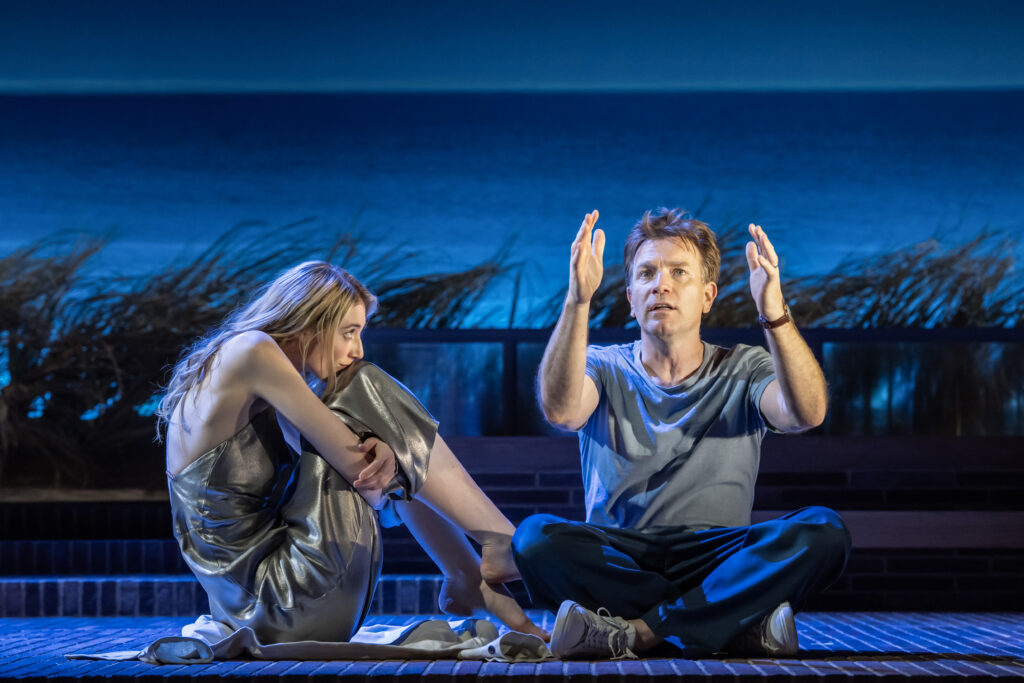
If you’ve read reviews of Raicek’s work– her hit play My Master Builder ran last spring at London’s Wyndham’s Theatre to sold-out houses– you’ve seen a lot of adjectives like “feisty” and “provocative.” (These are the words people use when women think or write about sex.) The moniker “Racy Raicek” reminds us how to pronounce her surname. These descriptors usually come alongside lists of the stars that have or will appear in her productions. She’s worked on Younger and Gossip Girl; up next is Night Float, an erotic thriller series adapted from her play Vertebrae and starring Nina Dobrev. Raicek’s play Fire Season is in pre-production, with an early workshop featuring Amanda Seyfried and Billy Crudup.
Our lives overlap again: my past life as a decorator out east mirrors her obsessive research into the lives of architects and interior designers in the Hamptons, the world at the heart of My Master Builder, starring Elizabeth Debicki alongside Ewan McGregor, who returned to the stage after a 17-year hiatus. Both My Master Builder and The Plunge circle May–December romances, love triangles, unstable relationships grappling with desire, power, and grief. Both share metaphors– architecture and jewelry– of aesthetic beauty that can hide rotten spots within. (“Architecture is the fiction of the real world,” says McGregor as the titular character.)
“I became really obsessed with the idea of how we preserve memory, how it’s warped by trauma. I was really interested in the work of David Chipperfield, who became known as the ‘architect of memory,’ preserving places that had been destroyed in war. And strangely, there are parallels with that and a jewelry designer, in the sense that a piece of jewelry contains so much history and meaning.”
She laughs when I tell her the English theater reviews I read had a lot of pearl clutching and outrage.
“So much pearl clutching. A lot of knickers in a twist, I’ll say. British men are very protective of their source material. Sex on stage! It really brings out a lot of very challenging emotions in people. But being in the audience…hearing people laughing, sobbing, getting into fights with their partners at intermission, yelling at the stage in despair at the end…It felt like the active spectator sport of theater.”
“So Shakespearean,” I say.
“Yes! My director, Michael Grandage, said he’d never seen anything like it. As a writer who puts desire front and center…it was so interesting in seeing how successful commercially the play was, in challenging us to feel again. Despite the voices of some very offended male critics,” Raicek smiles mischievously, “it was one of the most successful plays of the year. It sold out every single night for 13 weeks. I had 100 people at the stage door every single day.”
Another parallel between us: we both spent years navigating relationships with much older men, followed by happy marriages to younger ones. Her 2024 nuptials to menswear executive Douglas Raicek may have taught her she doesn’t need a drama-fueled personal relationship to produce intense work.
Upcoming, there are various major adaptations for Miramax, HBO, and Netflix, a new play about the chaotic relationship between Edvard Munch and his redheaded muse, Tulla Larsen, who shot him in the hand during a drunken argument. The Plunge adaptation is already in the works ahead of the book’s release, with a big, soon to be announced, star attached. And, in “possibly an act of self-torture,” another novel. (I would add my own adjectives to Raicek’s bio: ambitious, driven, near unbelievably hardworking.)
“When I moved back to New York, I put my personal life completely aside. Having an experience that derailed my work was something I’d never experienced. My whole life, all I ever was was a writer. I made the decision to never let anything come in the way of my work again. Wild, romantic experiences fueled my work in many ways, but at the end of the day…until I was ready to really open myself up to the possibility again, it didn’t come. And there’s something interesting in finding a partner who can give me– as a wild female writer– as much space to create as possible. So many relationships took all the oxygen.”
I tell her that it sounds like, after all this time, she’s describing the feeling of safety.
“Yes,” Raicek says without hesitation. “I feel safe. It’s very compelling to live in a zone of danger– messy and chaotic, careening down the other path. But living in a safe space is harder if you’re really connected to yourself. It’s a very different place to write from. But it’s necessary because exposing and exploring our deepest emotional truths will always be painful. You’re reopening wounds. As a writer you have to be unflinching and honest. I wish it were otherwise.”
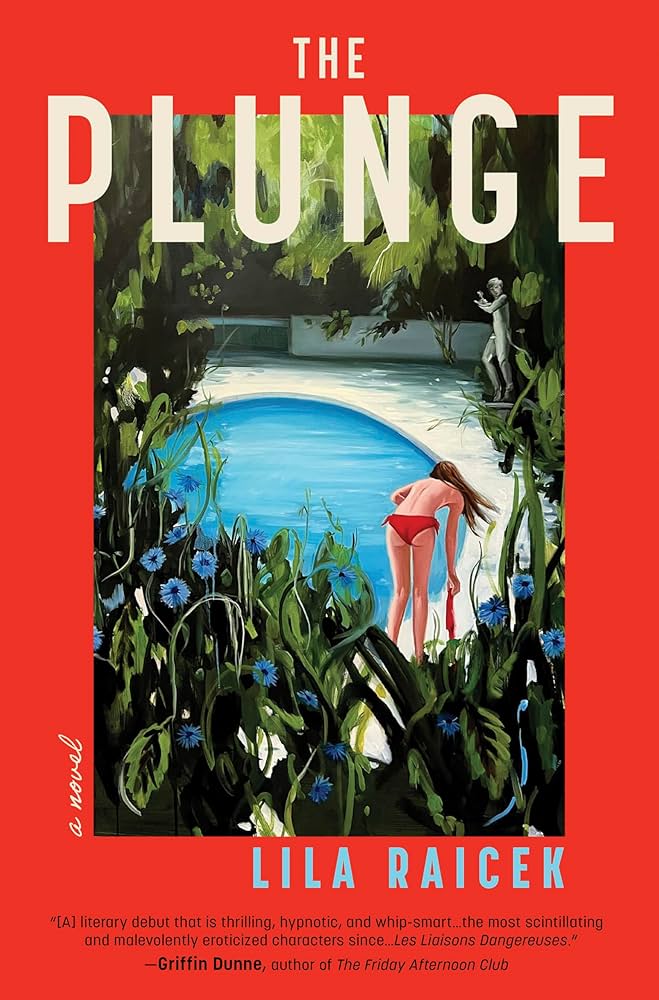
BUY The Plunge HERE
