“Julia Roberts plays, Kelly Ripa plays, and so does Sarah Jessica Parker…but not necessarily together. (Oh, to be a fourth at that table.)”
Lunch, who does that anymore? Mahjong tiles have taken over Upper East Side high society—and might just make you smarter in the process. JANET MERCEL talks to the doyennes behind the revival.
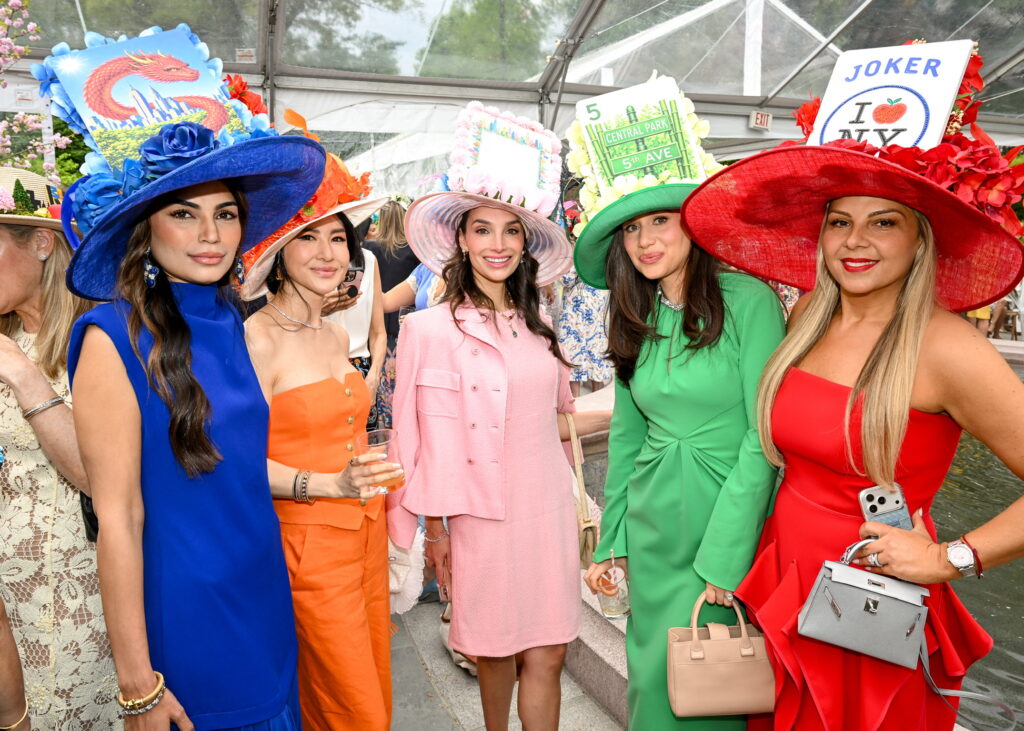
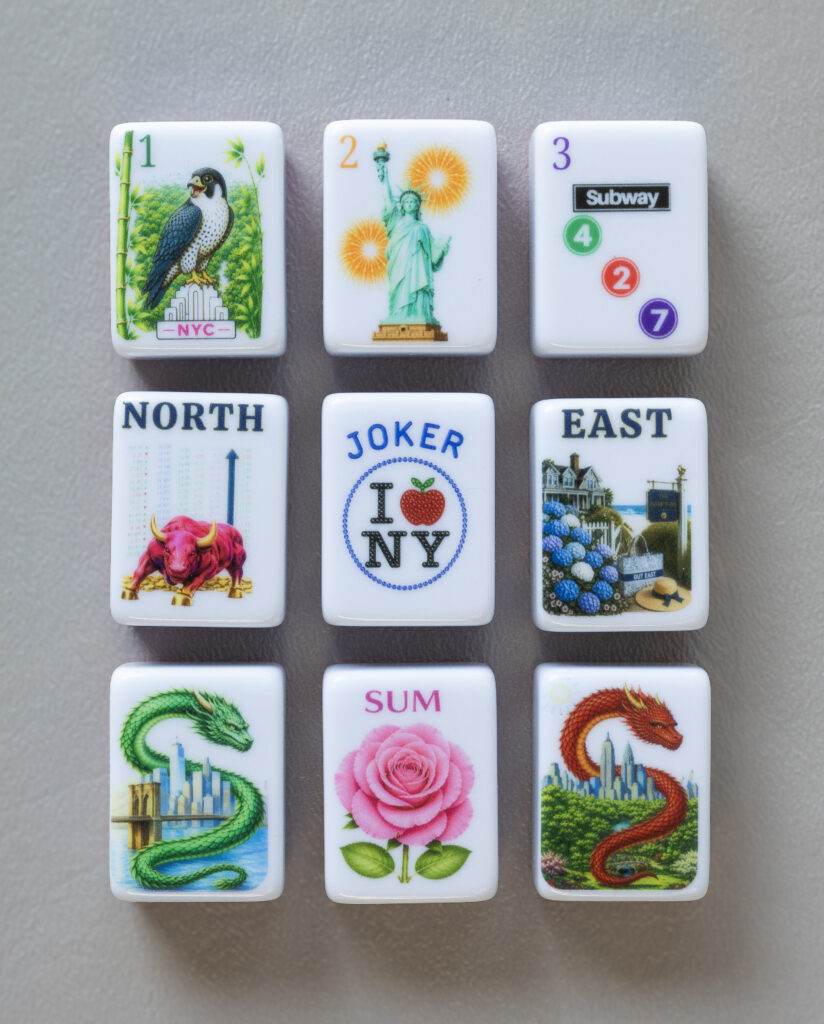
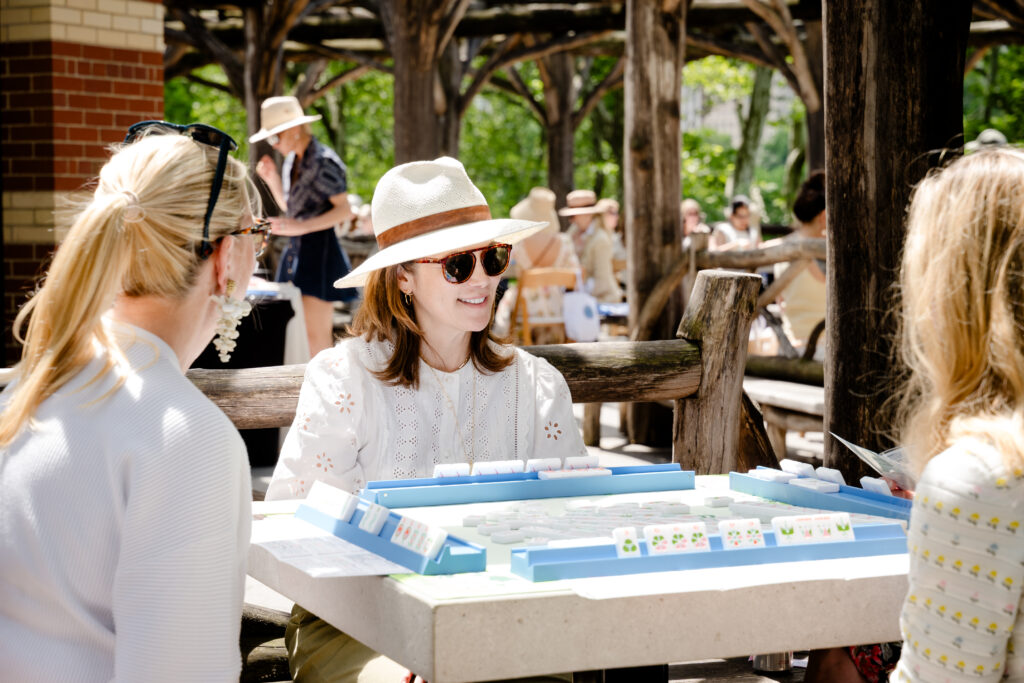
If you were in the Conservatory Garden for the Women’s Committee of the Central Park Conservancy’s Frederick Law Olmsted Awards Luncheon—aka the “hat luncheon”—you likely noticed one table drawing the most attention. Eleven women in bright dresses, with hats built tile by tile around the game that has, this year, eaten New York. On one, a peregrine falcon stood in for the bird (bam!). A daffodil—the flower planted across the five boroughs after September 11th—was the spring tile. There were pink roses for the state flower, and firecrackers (crack!) over the Statue of Liberty.
New York Social Diary featured the group as its hero image. WWD loved the vibe. Vogue called it “campy,” “beautifully executed,” and “so of the moment right now.” The ladies who lunch have become gamers, and it’s not subtle. There’s a regular game at Casa Tua, and one at the 92nd Street Y, where the author and filmmaker Jill Kargman moderated a sold-out night built around the release of this year’s National Mah Jongg League card. It’s at Oscar de la Renta and Ralph Lauren, where the houses have worked out that a morning of tiles puts sixty women on the sales floor before lunch. The Central Park Conservancy itself held its first mahjong social at the restored Chess & Checkers House; tables were gone in minutes. Julia Roberts plays, Kelly Ripa plays, and so does Sarah Jessica Parker…but not necessarily together. (Oh, to be a fourth at that table.)
Jaclyn Rottenstreich, who masterminded the hat luncheon theme and commissioned the milliner Cherry on Top Derby Hats, says the friends who teased her—what are you, a little old lady? —have come around. “I said, ‘you better get on board, or you’re going to be left in the dust,’” she says. Between mahjong speakeasies, cocktail hours, fundraisers, and retreats, the game is behind every manner of social event. The fustiness is gone. “The only time you’re ever at a table with a lot of people these days is in mahjong. People just aren’t doing lunch anymore.”
“Mahjong feels timely because it has become such a popular way for women to gather. It gives people a reason to come together that is more interactive than lunch and more intimate than a cocktail party.” – Brooke Parker
“Mahjong feels timely because it has become such a popular way for women to gather. It gives people a reason to come together that is more interactive than lunch and more intimate than a cocktail party. It is social, but not passive. People talk, laugh, strategize, compete, and connect. It also feels refreshingly analog in a world where everyone is usually on a screen.” Brooke Parker adds.
If the uptown takeover has a modern face, it might be Kargman. In October she’ll compete in the annual Mah Jongg World Championship in Vegas, although she says she’s only going “because Metallica is at the Sphere.” She tied for fourth at a Miami tournament, which is what talked her into Vegas. “I don’t get nervous. I have a life,” she says. “There are people where this is their whole life. Every pillow in their house is mahjong-themed needlepoint. They have fifty Labubus pinned on for luck. They’ll clack the tiles and rub them around their boobs counterclockwise for luck. Their Hop Toi; it’s a rituals thing. I just don’t really give a shit, because I think it’s fun.”
Like any sport, it has its sore winners and losers. “So much of your personality comes out at the mahjong table,” says Gregg Swain, co-author of Mah Jongg: The Art of the Game. “There’s a funny saying in China that you should never marry anybody unless you’ve played mahjong with them.”
“There are people where this is their whole life. Every pillow in their house is mahjong-themed needlepoint. They have fifty Labubus pinned on for luck. They’ll clack the tiles and rub them around their boobs counterclockwise for luck.” – Jill Kargman

Kargman knows this firsthand: “Some people get really angry,” she reports. “I’ve had someone throw tiles. Okay, I guess you really want that gift card. I’ve done tournaments where the people are just mean and joyless. I’m not trying to be national champion, but I am fast. So why not have the challenge?” For anyone on their neuroplasticity journey, the challenge is the point. “I know it staves off dementia,” Kargman says. “My grandmother was ninety-eight and three-quarters when she died, and she played the week before. Sharp as a tack.”
Dr. Heidi Bender, a neuropsychologist at Weill Cornell Medicine, works with children testing for attention deficits and learning differences. She met Brooke Parker through the school-placement world—and was the one to recommend the Kentucky milliner for the hat luncheon. (Brooke Parker also suggested her kids’ school start a mahjong program after parent drop-offs, which caught on like wildfire.) Bender sees a parallel to pickleball’s arc—a game once coded as older-generation and now drawing younger players. “There’ll always be these ebbs and flows of activities that pique our interest,” she says. “But now is the mahjong moment.”
A diminishing mind and a developing one work the same muscles and benefit from the same exercise, and Bender describes mahjong as a near-perfect mental workout. “I emphasize the executive function, because you really must think steps ahead. It works on key brain skills,” she says. “You’re doing math and keeping track of a lot of details.” Particularly in older adults, the built-in community might be the strongest neuroprotector. “It’s stimulation and conversational upkeep, all those human skills. The social piece is so key—it not only staves off depression or mood issues, but it also helps with cognition.”
For a lot of players, the intergenerational factor is one of the main draws, and most importantly– it’s analog. There are no screens, no scrolling, just tiles and racks. Mahjong’s rise in the time of smart houses and AI is no coincidence. “It’s a rebellion,” Kargman declares, whose mother and daughters all play. “You’re sitting with three friends, looking at each other instead of a screen. People relish that time. They carve it out.” A few days without it, she says, and the craving sets in.
The intro line of one mahjong tutorial book reads, “The first impression many people have of mahjong is a game of mysterious ritual and inscrutable rules.” Since the same can be said for the Upper East Side, it makes sense that many beginners need the right person in their contacts: Cari Kuprenas. “The Mahj in the Wild” podcaster has been playing for twenty years and teaches on both coasts. Kuprenas’ student body includes Sarah Jessica Parker and Jessica Seinfeld and is strictly word of mouth. After moving to New York ten years ago, she took on pupils to make friends. “I started playing at the Junior League,” Kuprenas says. “I had one friend, Gregg Swain, the doyenne of the Upper East Side, and within six months, through mahjong, I was running into people I knew on Madison Avenue. I have a friend who said, once you run into people on Madison Avenue, you’re a New Yorker.”
This is not the game’s first American life. American mahjong—with the annual National Mah Jongg League card and jokers, descends from the Chinese game that traveled west with Joseph Park Babcock in the 1920s. The Standard Oil businessman picked it up in Shanghai gambling houses and figured it would make a booming board-game trade back home—he trademarked “Mah-Jongg.” Abercrombie & Fitch, the Madison Avenue outfitter, dispatched buyers to Asia to source every last set they found, ultimately selling 12,000 before the craze died out. Then, in 1937, five Jewish women founded the National Mah Jongg League. The game that resulted is a very different one, and it’s the version most people here play, but every variant traces back to China.
Kuprenas, a fifth-generation Angeleno from a family restaurant empire that lays claim to inventing the Chinese chicken salad, grew up with grandparents who were “mad-crazy” Chinese mahjong players, running high-stakes games above the restaurant into the wee hours. It skipped a generation–her mother never loved the game, because it kept her father away at his men’s club all night. “It becomes an obsession.” Otherwise, the association is positive. “I have the oxygen-mask theory,” Kuprenas says. “Put on your own mask first before you help anyone else. Mahjong takes that role in your life. For two or three hours out of your week, all your troubles, the stuff you’re trying to take care of—it’ll be there when you’re done.”
“I joke that my daughter somehow manages to call every time I’m playing. Now I just answer the phone saying, ‘Mahjong!’ and she knows that I’m in the middle and I’ll call her later.” – Lizzie Tisch
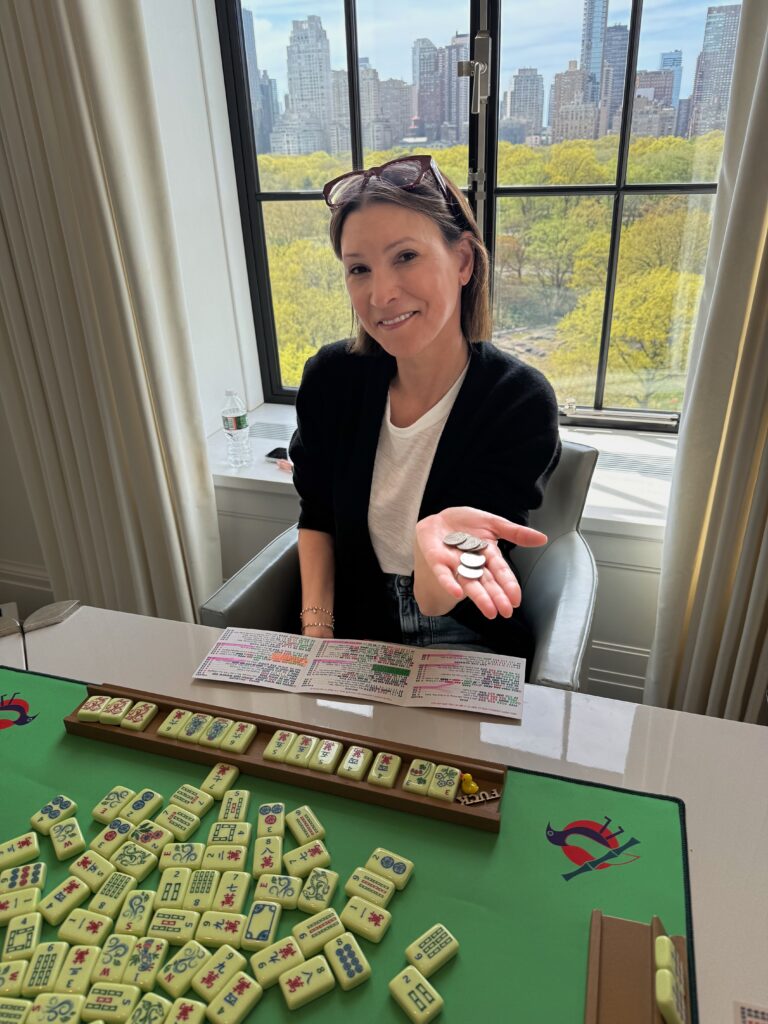
Devotee Lizzie Tisch agrees. “It’s a time to decompress. I joke that my daughter somehow manages to call every time I’m playing. Now I just answer the phone saying, ‘Mahjong!’ and she knows that I’m in the middle and I’ll call her later.” Tisch began learning the game from Kuprenas about a year and half ago and was hooked after three lessons. “Much to my husband’s chagrin, I’m sitting there in bed at night, playing mahjong on my iPad. We started organizing regular groups, and I would raise my hand, telling anybody I knew that played. I’m available. Count me in.” The hook, Tisch explains, is a combination of things. “It’s like learning a new language, but not as hard. It’s just something good for my brain. I love the tactile nature, the little clacking noises the tiles make. And, of course, the shopping element is super fun.”
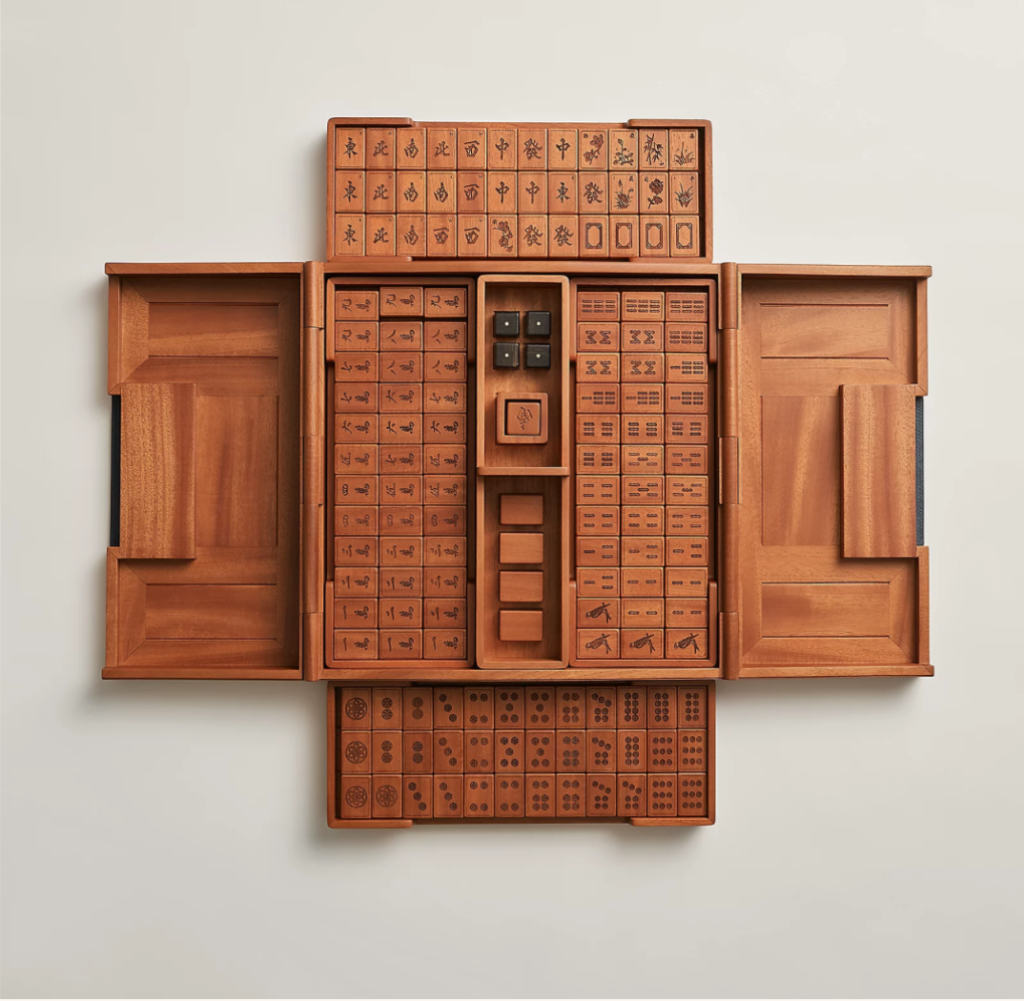
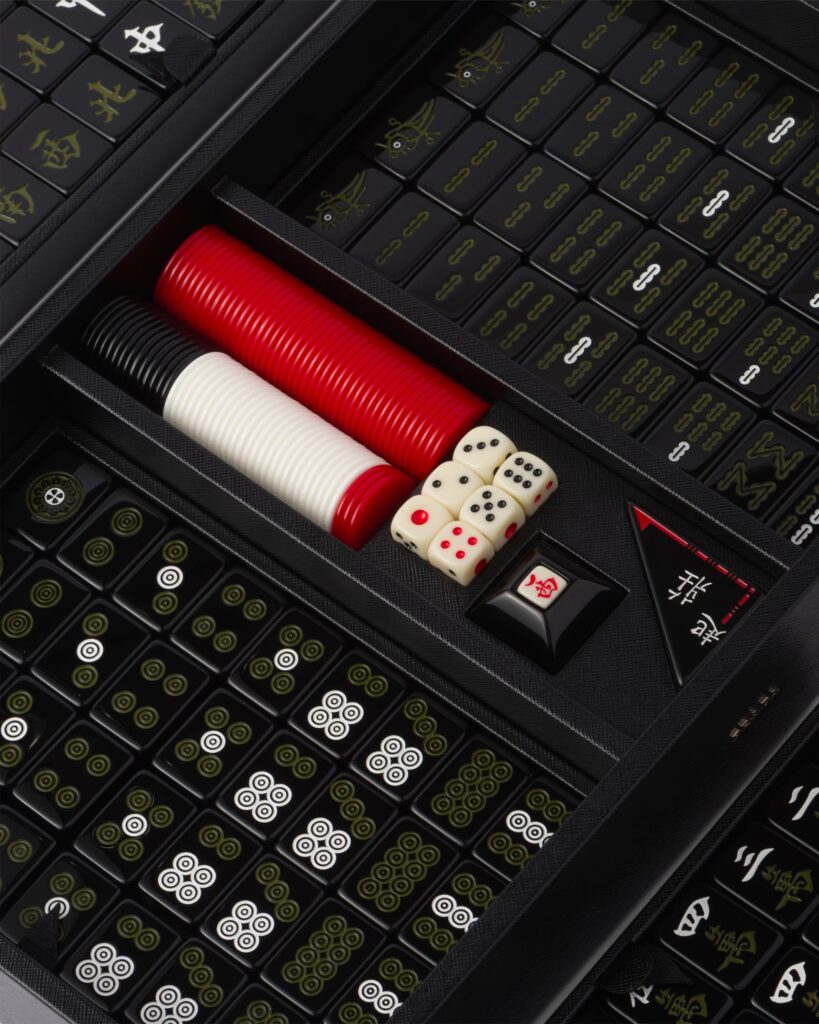
Although the point of entry can be as low as a traditional set for $30, personal mahjong aesthetic comes with its own price tag, depending on where you shop. Hermès sells a set; so does Brunello Cucinelli. And TBC Mahjong created a custom set inspired by Rottenstreich’s hat luncheon table. Kargman has fourteen sets. Kuprenas refuses to divulge how many she owns. “A lady never tells. And my husband doesn’t know how many…the beauty of Venmo!”
In 2014, when Gregg Swain wrote The Art of the Game, the tiles themselves were the point. Her grandmother had played, but Swain didn’t learn until 2010, from Linda Feinstein of The Manhattan Mah Jongg Club. Looking for the meaning behind the images in vintage sets, having studied art history at Smith, she teamed up with four friends to write what she calls “the first book on mahjong tile art.”
“Mahjong was the 6th biggest export from China in the 1920s. It really helped their economy, which was down the tubes. Everybody who could get into the Mahjong business got into the Mahjong business. They had some of the best wood carvers, inlay artists, and painters,” Swain says. When the game fell out of favor, many sets ended up in landfills or molded in basements. While not everyone may understand the origins or meaning behind the tiles, Swain says at least the artwork is being newly appreciated. “There are new sets galore, and the themes are really fun.”
Beginners are better off learning on a plainer set, but from there, figuring it out is half the fun. With a background in clinical psychology, Swain brings it back to exercising our gray matter. More elaborate designs make players use their brains differently: the visual discrimination area works harder. “An 8 bam doesn’t look the same from set to set, so it forces you to really look.”
“I grew up in New York,” Swain recalls, “in the days before everybody had air conditioning. People would spill out onto the sidewalks with game tables in the shade. They would say marvelous words like ‘dragons’ and ‘flowers.’ I thought they were swearing. Crack! Bam! I was quite shocked that these older ladies were sitting around swearing. At the end of every game, they would burst out into laughter. And I thought, my goodness, whatever they’re doing, I want to do it.”